How the Flip Flop Became a Fashion Statement
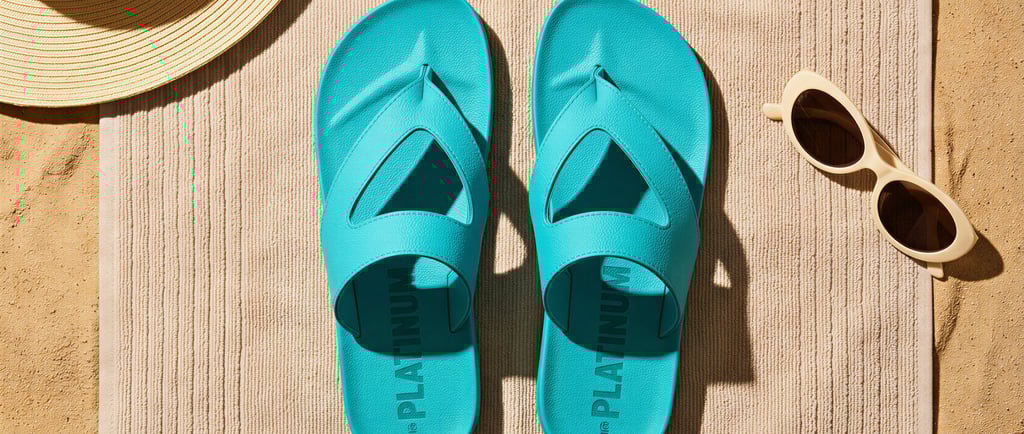
Walk into any Zudio, Reliance Trends, or Easybuy store today and you will not find the plain rubber slipper of a decade ago. Indian mass retail has undergone a quiet fashion revolution — and at the centre of it is the humble flip flop, now reimagined in neon, ombre, rhinestone, and emboss.
Anurag Chaturvedi
3/20/20262 min read
How the Flip Flop Became a Fashion Statement
For years, EVA flip flops and hawai chappals were purchased on price alone. Colour options were limited to black, blue, and brown. Design was an afterthought. Then something changed.
As Indian consumers — especially women aged 18–35 — began spending more on personal style, even at the mass retail level, footwear buyers started demanding more from their manufacturers. Fast trend cycles, bold colourways, and surface decoration went from "nice to have" to non-negotiable.
Today, a flip flop that doesn't tell a visual story has a much harder time on the shelf. The product has to earn its place — not just through comfort and durability, but through design.
Neon Screen Printing
High-visibility neon orange, magenta, and green prints on straps and footbeds. Particularly strong in women's and kids' categories.
Ombre & Gradient Effects
Two-tone and sunset-fade colourways on EVA footbeds give an elevated, fashion-forward look at accessible price points.
Rhinestone Embellishment
Crystals and stone detailing on straps are driving strong sell-throughs in the women's premium segment at major retail chains.
Hot & Cold Embossing
Textured footbeds with floral, geometric, or branded emboss patterns add a premium tactile quality without a significant cost jump.
A fifth trend worth noting: multi-material uppers. The combination of fabric straps with EVA soles, or PU with braided detailing, is giving designers a wider palette to work with — and giving buyers a stronger reason to place repeat orders.
A flip flop that doesn't tell a visual story has a much harder time on the shelf. Design is no longer an afterthought — it is the product.
What This Means for Retail Buyers and Brands
For retail buying teams, the implication is clear: the era of sourcing the same flip flop season after season is over. Consumers have more choices, more awareness of trends, and less patience for generic product.
The brands winning on the floor right now — whether it's a Zudio exclusive or a Reliance private label — are the ones investing in differentiated design at the manufacturing stage, not just at the packaging stage.
This is where a capable OEM and ODM manufacturer becomes a genuine strategic partner, not just a vendor. The ability to translate a trend brief into a production-ready design — complete with the right sole compound, strap material, print technique, and embellishment — in a short development window is what separates the leaders from the rest.
Trends to Watch for SS26
Based on what we are seeing in development pipelines and early buyer conversations, here is what is gaining momentum for the Summer/Spring 2026 season:
Sustainability storytelling — Retailers are beginning to ask for recyclable and eco-friendly compound options as a category differentiator. Expect this to become a mainstream retail requirement within 2–3 seasons.
Tonal minimalism — A counterpoint to the neon wave, tonal single-colour looks in earthy beiges, terracottas, and olive greens are resonating with premium and lifestyle buyers.
Digital print on straps — As digital printing technology becomes more accessible, photographic and illustrative prints on fabric and PVC straps are opening up new design possibilities with no tooling investment.
Looking for a Design-Forward Manufacturing Partner?
Profax Footwear produces over 150,000 pairs per month from our BIS and Sedex certified facility in Bahadurgarh, Delhi NCR — supplying Bata, Zudio, Reliance, and Easybuy. We offer full OEM and ODM capability from concept to delivery.